
이 게시물에는 제휴사 링크가 포함되어 있을 수 있습니다. 우리는 이 게시물에 언급된 회사로부터 돈이나 제품을 얻을 수 있습니다.
 © Depositphotos.com / jeanro
 다음과 같은 말을 하면 여러분도 제 말에 동의하실 것 같습니다:
새로운 주인으로서 배워야 할 첫 번째이자 가장 중요한 것 중 하나는 강아지를 집에서 훈련시키는 방법...그리고 빠르게!입니다.
글쎄요, 약간의 지식으로 무장하고 잘 짜여진 계획을 따르면 강아지를 집에서 훈련시키는 데 걸리는 시간을 극적으로 줄일 수 있고, 바닥과 카펫을 더 빨리 청소할 수 있는 날이 올 수 있다는 것이 밝혀졌습니다.
그리고 이 글에서는 '사고', 엉망진창, 청소를 최소화하면서 가능한 한 가장 빠른 시간에 강아지 집을 훈련시킬 수 있는 자세한 단계별 방법을 제공합니다.
나는 '마법의 약'을 약속하지 않습니다. ' 또는 '하우스 트레이닝 비법 ' 그러면 일주일 안에 강아지 집 훈련을 받게 됩니다. 그런 비밀은 존재하지 않으며, 걸리는 시간은 강아지마다, 주인마다 다릅니다.
하지만 제가 제공하는 것은 셀 수 없이 많은 시간의 연구와 제 자신의 하우스 트레이닝 경험을 바탕으로 작성된 포괄적인 가이드로, 무엇이 효과가 있고 효과가 없는지 알려줍니다.
인내심, 일관성, 헌신으로 이 가이드를 따른다면, 당신의 강아지와 당신 자신 모두를 완전 초보자부터 하우스 트레이닝 에이스까지 가능한 한 빠르고 스트레스 없이 데려갈 수 있을 것이라고 장담합니다.
간단한 팁: 집에서 발생하는 사고 수를 줄이려면 소변 냄새를 철저하게 제거하는 것이 좋습니다. Puppy In Training 얼룩 및 냄새 제거기와 같은 효소 세척제를 권장합니다.
'강아지를 집에서 훈련시키는 방법 '는 저의 '하우스 트레이닝 궁극적인 가이드' 시리즈의 11번째 기사입니다.
이전 10개의 기사에는 가장 일반적인 집안 훈련 질문에 답하고 앞으로 배변 훈련 방법과 스타일에 대해 정보에 입각한 결정을 내리는 데 도움이 되는 지식을 제공하는 풍부한 지원 정보가 포함되어 있습니다.
그런데 일부러 이런 '방법을 만들어 놓았습니다. ' 최대한 완전하고 독립적으로 안내하므로 이전 기사를 읽는 것이 필수는 아닙니다.
여기에서는 가장 중요한 정보를 덜 자세하게 반복한 다음, 더 자세히 읽고 더 깊이 이해하고 싶으시면 해당 기사에 링크를 걸어주세요.
이 가이드를 사용하려면 처음부터 끝까지 한 번 완전히 읽어보는 것이 좋습니다. 그러면 강아지를 성공적으로 집에서 훈련시키기 위해 알아야 할 모든 내용을 다룰 수 있을 것입니다.
이 글은 길다는 점을 경고합니다. 매우 길다. 읽는 데 15분 정도 걸릴 것 같습니다. 하지만 당신이 배우게 될 것, 가능한 한 빨리 강아지를 집에서 훈련시키는 가장 좋은 방법은 강아지와 함께 처음 몇 주, 몇 달 동안 투자한 시간을 수백 배로 돌려줄 것입니다.
그리고 이 가이드를 북마크에 추가하면 위의 목차를 클릭하여 특정 주제에 대한 기억을 되살려야 하는 경우 해당 섹션으로 직접 이동하여 참조 자료로 사용할 수 있습니다.
그럼 시작하겠습니다...
빠른 추천: 우리가 집 훈련에 좋아하는 또 다른 도구는 개 배변 초인종인 스마트 벨입니다. 약간의 훈련이 필요합니다. 스마트 벨은 강아지가 배변을 해야 할 때 알려주고 '터치' 신호를 보낼 때도 유용합니다.
생후 8주가 된 강아지는 충동이 일어날 때 자신이 서 있는 어느 곳에서나 소변을 보거나 똥을 싸는 것 외에는 아무것도 모릅니다.
그들은 이것이 올바른 방식이 아니라는 사실이나 카펫에 배변을 하는 것이 허용되지 않는다는 사실을 전혀 모릅니다.
적절한 화장실 장소를 선택하고, 강아지에게 그 장소를 사용하도록 훈련시키는 동시에 집 안의 다른 곳에서는 배변을 해서는 안 된다는 것을 가르치는 것은 귀하에게 달려 있습니다.
이를 달성하기 위해서는 성공을 위한 2가지 필수 열쇠가 있습니다. 당신이 접하게 될 모든 방법이나 기술의 궁극적인 목표인 2가지 열쇠:
이를 달성하는 가장 큰 부분은 강아지를 지정된 화장실에 자주 데려가는 것입니다.
이렇게 하면 당신은 그들이 옳은 일을 한 것에 대해 칭찬할 수 있는 가장 많은 기회를 얻게 됩니다. 그리고 비어 있기 때문에 잘못된 장소에 있을 때 배변을 볼 필요성도 줄어듭니다.
하지만 이만큼 간단하지는 않습니다. 또한 격리와 집중 감독을 혼합하여 집에서의 실수를 예방해야 합니다. 그리고 이 연중무휴 작업을 귀하의 현재 라이프스타일과 일상에 맞게 조정하세요.
이를 위해서는 예술이자 과학이 필요하며, 강아지에게 옳은 일을 할 수 있는 기회를 최대화하고 잘못된 일을 할 기회를 제한하기 위해 잘 생각하고 고도로 계획된 접근 방식이 필요합니다.
이 가이드에서는 정확한 방법을 알려드립니다.
강아지는 얼마나 오랫동안 방광을 참을 수 있나요? 강아지는 하루에 몇 번이나 배변을 해야 합니까? 강아지가 집에서 훈련을 완전히 마치려면 얼마나 걸리나요?
하우스 트레이닝을 시작할 때 주인이 갖게 될 질문이 많고 거기에는 잘못된 정보도 많이 기재되어 있습니다.
그래서 가장 자주 묻는 질문에 답하기 위해 다음 글을 썼습니다:시작하기 전에 기본적인 사실을 알아야 합니다.
해당 기사를 읽어 강아지와 자신에 대한 현실적인 기대치를 갖고 어느 기간에 둘 다 무엇을 달성할 수 있는지 알 수 있도록 권장합니다.
 © Depositphotos.com / nasirkhan
 강아지는 당신이 무엇을 요구하는지, 왜 하는지 전혀 모르기 때문에 집 훈련 과정에서 당신은 가장 중요한 부분입니다.
아이들에게 허용되는 화장실 습관을 가르치는 것은 당신에게 달려 있으며, 아이들이 이해하기 쉽고 스트레스를 받지 않는 방식으로 가르쳐야 합니다.
일에 접근하는 방법은 일이 얼마나 순조롭게 진행되는지에 극적인 영향을 미치므로 저는 전체 기사를 이 문제에 전념했습니다:하우스 트레이닝에 취해야 할 사고방식과 접근 방식.
이 기사에서는 절대 사용해서는 안 되는 전통적인 방법, 사용해서는 안 되는 이유, 대신 무엇을 해야 하는지에 대해 논의했습니다.
저는 여러분이 가이드와 트레이너의 역할을 어떻게 수행해야 하는지, 인내심과 이해심이 있으면서도 확고하고 일관되어야 하는지에 대해 설명합니다.
강아지의 타고난 본능을 활용하는 방법, 집에서 사고를 처리하는 가장 좋은 방법, 배변 훈련을 통해 미래의 관계를 함께 구축하는 방법에 대해 다룹니다.
하우스 트레이닝 프로그램을 시작하려는 사람이라면 누구나 읽어야 할 중요한 내용이므로 이 가이드를 계속 진행하기 전에 잠시 들러서 읽어 보시기 바랍니다.
강아지가 신뢰할 수 있을 때까지 집에 접근하지 못하도록 제한하는 것은 성공을 향한 더 빠르고 깨끗한 길을 위해 할 수 있는 최선의 방법 중 하나입니다.
개들은 먹고 자는 공간인 굴 안을 함부로 없애지 않으려는 본능을 가지고 있습니다. 귀하의 임무는 강아지에게 집 전체가 굴이고 그 안의 어느 곳도 더럽혀서는 안 된다는 것을 확신시키는 것입니다.
처음에 강아지를 집의 한 방에만 제한하고 먼저 청결하게 유지하도록 설득한 다음 허용되는 공간을 천천히 확장하면 훨씬 쉽게 할 수 있습니다.
개들은 일반화를 잘 하지 않기 때문에 부엌에서 배변을 해서는 안 된다는 것을 알더라도 이 아이디어를 침실에 적용하지 않을 것입니다.
거의 별도의 아이디어로 침실에서 배변을 하지 않도록 가르쳐야 합니다.
집 전체에 대한 접근을 즉시 허용하면 강아지는 이곳을 하나의 큰 장소로 보지 않고 여러 개의 분리된 완전히 다른 장소로 인식하게 됩니다.
하지만 작게 시작하여 한 구역으로 제한하고 배변 훈련을 한 다음 조금씩 확장하면 강아지가 새 구역을 깨끗하게 유지해야 하는 생활 공간과 연관시키기가 더 쉽습니다.
이렇게 하면 집 부수는 과정의 속도가 빨라지는 동시에 강아지가 겪게 될 사고 횟수와 철저하게 청소해야 하는 횟수가 줄어듭니다. 누구의 책에도 나올 법한 승리 상황!
 © Depositphotos.com / tairen10
 다음은 강아지의 배변 훈련을 돕기 위해 필요한 품목 및 제품 목록입니다.
일부는 필수이고 일부는 선택 사항이며 필요한 것은 선택한 방법에 따라 달라집니다.
가이드를 완료하고 실행 계획을 알게 되면 필요한 것이 무엇인지 결정할 수 있습니다.
이러한 항목이 어떻게, 왜 그렇게 유용한지, 각 항목을 어떻게 사용해야 하는지, 하우스 트레이닝 중에 어떻게 도움이 되는지에 대한 자세한 설명을 원하시면 내 기사를 참조하세요:
하우스 트레이닝에 필요한 제품, 소모품 및 장비
 © Depositphotos.com / belchonock
 당신이 먹이는 것과 강아지에게 먹이는 방법은 그 과정에 엄청난 영향을 미칩니다.
하우스 트레이닝 중 먹이 선택이 어떻게 엄청난 변화를 가져오는지에 대한 자세한 기사를 작성했으며, 읽어보실 수 있습니다. 여기를 클릭하세요.
여기에는 음식에 대한 선택이 성공에 미치는 영향에 대한 자세한 논의와 강아지에게 먹이를 주는 방법에 대한 많은 조언이 포함되어 있습니다.
물론 이 내용을 읽어 보시기를 적극 권장합니다. 그런 다음 정보를 다시 확인하고 다음 섹션을 건너뛰어도 됩니다. 하지만 시간이 부족한 분들을 위해 기사의 주요 내용은 다음과 같습니다.
품질이 낮은 음식은 값싼 충전재로 가득 차 있고 영양가가 낮으며 소화하기 어려워 더 많은 양의 음식을 통과하게 됩니다.
고품질 음식은 영양가가 높지만 쉽게 소화되고 더 많이 흡수되므로 통과되는 양이 적습니다.
따라서 고품질의 음식을 섭취하면 개가 매일 배변하는 횟수가 줄어들어 집에서 훈련할 때 확실히 이상적입니다.
강아지는 고품질의 사료에서 더 많은 영양분을 추출하고 저렴한 충전재가 직접적으로 흐르기 때문에 대변이 더 단단해지고 배변 조절을 배우는 데 도움이 됩니다.
음식은 합리적으로 일관된 속도로 강아지의 시스템을 통해 이동하기 때문에 매일 같은 시간에 먹이를 주면 매일 같은 시간에 배변하는 패턴에 정착하게 됩니다.
그러면 이 시간을 중심으로 일정을 계획할 수 있으며, 강아지는 이 시간에 배변 시간을 예상하는 방법을 배우게 되며 집 훈련은 두 사람 모두에게 더 쉬워집니다.
 © Depositphotos.com / lifeonwhite
 엄격한 먹이 시간을 고수하는 대신 하루 종일 강아지에게 음식을 남겨두면 강아지가 무작위로 음식을 골라 먹을 수 있습니다.
이는 '자유 급식'으로 알려져 있으며 강아지가 적절한 배변 습관을 익힐 때까지 할 수 있는 최악의 행동입니다.
무작위로 먹으면서 무작위로 똥도 흘려야 합니다.
강아지가 언제 배변을 해야 하는지에 대한 규칙적이고 예측 가능한 패턴이 없으면 집에서 훈련하는 것이 더 어려울 것입니다.
그러므로 강아지가 정해진 시간에 식사하도록 하고, 비웠든 안 비웠든 식사 사이에 밥그릇을 치우도록 하세요.
식단의 극적인 변화는 종종 묽은 변이나 설사로 이어지며, 강아지는 신체적으로 배변을 참을 수 없게 되며 이는 집 훈련 중에 일어날 수 있는 최악의 상황입니다(당신이 해야 할 모든 청소는 말할 것도 없고! )
품질이 뛰어나고 영양학적으로 균형이 잡힌 단일 브랜드의 강아지 사료를 선택하고 이를 고수하세요. 강아지의 사육사가 사용한 제품이 일반적으로 최선의 선택이므로 강아지가 변경할 필요가 없습니다.
새로운 브랜드의 사료를 선택해야 하거나 더 나은 사료로 바꿀 생각이라면 래브라도 강아지와 대형견을 위한 최고의 사료 목록을 여기에서 확인하세요(새 창에서 열림).
하루 종일 강아지에게 자유롭게 물을 제공하고, 섭취량을 모니터링하여 너무 많이 또는 너무 적게 섭취하는지 판단할 수 있도록 해야 합니다. 하지만 강아지의 요구 사항은 다양할 수 있으므로 접근을 제한하지 마십시오.
가장 중요한 일은 잠자리에 들기 전 마지막 2시간 동안 물에 접근하지 못하게 하는 것입니다. 그렇지 않으면 밤새도록 여러 번 가야 하므로 당연히 원하지 않습니다.

개들은 자신의 소변 냄새에 이끌려 같은 장소를 화장실로 계속 사용합니다.
그리고 그들의 후각은 매우 예민해서 아주 작은 소변 흔적이라도 반복 공연을 장려하기에 충분합니다.
따라서 사고가 발생할 때마다 해당 부위를 꼼꼼하게 청소하고 소변과 냄새를 모두 제거하는 것이 중요합니다. 그렇지 않으면 강아지가 또 작은 웅덩이를 만들 가능성이 매우 높습니다.
집 안에서 배변을 하도록 장려하는 것은 당신이 달성하려는 목표와 정반대이기 때문에 당신의 노력을 망칠 수 있습니다.
일반 가정용 세제로는 냄새 제거 효과가 충분하지 않으므로 해당 목적에 맞게 특별히 제작된 얼룩 및 냄새 제거제를 사용해야 합니다.
그리고 결과를 보장하려면 단계별 방법이 필요합니다.
선택해야 할 청소 제품, 꼭 피해야 할 제품, 숨겨진 소변 얼룩을 찾는 방법(자외선 사용) 및 빠르고 철저한 청소를 위한 단계별 과정에 대한 조언을 보려면 다음 기사를 참조하세요.
사고가 발생하면:애완동물의 얼룩과 냄새를 제거하는 방법.
배변 훈련을 시작하기 전에 한 가지 매우 중요한 결정을 내려야 합니다. 강아지의 화장실이 외부에 있을 것인지, 내부에 있을 것인가, 아니면 둘 다에 있을 것인가? 그리고 어떻게 결정해야 할까요?
내 조언은 다음과 같습니다. 특별한 이유가 없는 한 야외 화장실 장소를 선택하세요.
개를 밖에서만 배변하도록 훈련시키는 것은 강아지가 이해하기 쉽고, 훈련시키기도 더 쉽고, 코에 더 친절합니다.
하지만 거동이 불편하거나 고층빌딩 최상층에 거주하는 경우에는 빠르게 밖으로 나가는 것이 불가능합니다.
그런 다음 적어도 강아지가 방광 조절 능력을 어느 정도 발달시킬 때까지 집 안의 화장실 장소를 선택해야 합니다.
강아지 화장실이 있을 때는 외부에 두고, 없을 때는 패드나 종이를 내부에 두어 두 가지를 혼합하여 선택할 수 있습니다.
하루 종일 일해야 하거나 때때로 개를 여러 시간 동안 혼자 두어야 하는 경우에 적합합니다.
비록 최종 계획이 강아지가 밖에서만 화장실을 가는 것이라고 하더라도 강아지가 갇힌 공간에 있을 때 강아지가 실내에서 화장실을 갈 수 있도록 '종이 훈련'을 하는 것이 좋습니다.
강아지의 나이에 따라 성장할 때까지 몇 시간 이상 방광을 참는 것이 물리적으로 불가능하기 때문입니다.
개인적으로 저는 제가 키웠던 모든 개들에게 항상 3, 4, 어쩌면 5시간 동안 혼자 남겨 두어야 했던 때가 있다는 것을 발견했습니다. 저는 이런 일이 발생하지 않도록 계획하고 있지만 가끔 그런 일이 발생합니다.
이 기간 동안 강아지를 상자에 넣어둘 수 없으므로 백업 계획을 세워야 합니다. 그리고 그것은 아이들을 운동용 펜이나 변기를 놓을 공간이 있는 작은 방에 가두는 것입니다.
그래서 집에 있을 때는 강아지를 경계하고 매우 적극적으로 집에서 배변 훈련을 시키지만, 집에 없을 때를 대비해 종이 훈련도 시켜야 합니다.
많은 친구 및 소유자와 대화를 나눈 후 이것이 많은 사람들에게 일반적인 시나리오라는 것을 알았습니다.
많은 사람들은 개가 밖에 있는 한 마당 전체를 화장실로 사용하도록 허용합니다. 하지만 매번 특정 지점 하나만 사용하도록 교육하는 것을 고려해 볼 수도 있습니다.
마당 어디든 갈 수 있도록 허락한다면 배설물을 모두 찾아 주울 수 없을 가능성이 높으며, 그곳에서 노는 아이들이 있거나 멋진 일광욕 의자 주변에 강아지 '예금'이 있다면 좋지 않습니다.
또한 강아지의 소변이 잔디밭에서 정기적으로 사용되는 부분의 잔디가 갈색으로 변하는 '잔디 화상'을 유발할 수도 있습니다.
더욱이, 그들이 정기적으로 문 근처나 창문 밑에서 소변을 보면, 특히 여름에 집 전체에 상당한 악취가 퍼질 수 있습니다. 그런데…
한 곳만 사용하도록 훈련시키면 다른 모든 사용자를 위해 마당이 더 깨끗하고 위생적일 것이며 질소 연소 잔디 문제가 발생하지 않으며 마당을 깨끗하게 유지하는 것이 훨씬 더 쉬워집니다.
따라서 매번 특정 영역을 사용하도록 개를 훈련시키는 것이 합리적입니다.
문, 창문, 바비큐 공간 또는 놀이 공간에서 떨어진 공간입니다. 하지만 '방해되지 않는' 장소를 선택하면 청소 업무를 회피할 수 있다고 생각하지 마세요.
개들은 이전에 가본 적이 있는 냄새를 맡을 수 있는 곳으로 가고 싶어하지만, 그곳은 여전히 깨끗해야 합니다. 따라서 그들이 한 곳을 계속 사용하도록 하려면 가능한 한 최선을 다해 해당 지역을 정기적으로 청소해야 합니다.
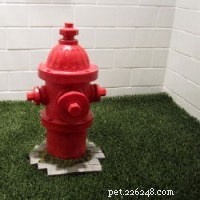
실내 배변 장소를 선택할 때 가장 먼저 염두에 두어야 할 점은 냄새와 함께 살아야 한다는 것입니다.
공간의 제약으로 인해 항상 가능한 것은 아니지만 침실, 아이들이 노는 곳, 음식을 준비하거나 보관하는 곳 등을 피하도록 노력해야 합니다. 선택의 여지가 별로 없습니다!
이상적인 장소는 거의 사용하지 않는 공간입니다. 즉, 여분의 공간, 세탁실 또는 약간 사용한 욕실입니다.
또 다른 고려 사항은 개 화장실을 놓는 표면입니다. 개를 사용하는 실내 배변에는 항상 사고 및 누락의 위험이 있습니다.
따라서 가능하다면 강아지의 화장실을 타일이나 리놀륨 바닥에 놓으십시오. 또는 카펫이 깔린 공간에 있어야 한다면 변기 아래에 플라스틱 시트를 깔아 바닥을 보호하고 청소를 더 쉽게 하세요.
실내 변기로 사용하기 위해 선택할 수 있는 옵션은 다양합니다. 잔디 상자, 쓰레기통, 일부 새 것에는 저장 탱크에 폐기물을 모으는 배수 장치도 있습니다. 목록은 이제 거의 끝이 없습니다.
그렇다면 무엇을 선택해야 할까요?
개인적으로 저는 항상 개들에게 밖에서 배변 훈련을 시키고 영구적인 실내 화장실을 제공하지 않습니다.
따라서 저는 잔디 상자나 배변 트레이를 고려한 적이 없으며, 방광을 담을 수 있는 시간보다 오랫동안 집에 혼자 두어야 할 경우 종이와 강아지 패드를 대신 사용하기로 결정했습니다.
하지만 선택을 해야 한다면 각각의 장단점은 무엇인가요?
[amazon fields=”B01MPWFYZA” value=”thumb” image_size=”large” Tracking_id=”labradortraininghq-20″ image_class=”ais200fr”] 강아지 패드는 흡수성이 뛰어나고 가장자리가 올라간 트레이에 놓을 수 있어 흘림이 줄어들고 비교적 쉽게 청소할 수 있습니다.
그들은 종종 강아지를 유인하여 제거하도록 냄새에 젖어 집 훈련 과정의 속도를 약간 높이는 데 도움이 될 수 있습니다. 또한 종이로 덮은 곳보다 집에 있는 것이 (약간) 더 보기 좋습니다.
단점은 종이만큼 넓은 영역을 덮지 못한다는 점이며, 종이를 갈가리 찢는 것을 좋아하는 개에 대한 이야기를 들었지만, 이는 대부분의 경우에 해당됩니다!

종이는 매우 저렴하며 오래된 신문을 사용하면 거의 무료입니다! 따라서 강아지가 어리고 경험이 없을 때 매우 저렴한 비용으로 넓은 지역을 커버할 수 있습니다.
그러나 소변은 몸에 담그기 전에 종이에서 흘러나오는 경우가 많기 때문에 유출이 더 흔하고 청소가 더 어렵습니다. 또한 원하는 경우 강아지 패드와 같은 트레이를 사용할 수도 있지만 종이를 통해 아래 바닥까지 더 쉽게 담글 수 있습니다.
마지막으로, 트레이에 붙였을 때 강아지가 종이를 찢어서 패드가 더 많이 들어 있는 곳에 펼치는 것이 매우 쉽습니다.
[amazon fields=”B00G7RMCHO” value=”thumb” image_size=”large” tracking_id=”labradortraininghq-20″ image_class=”ais200fr”] 쓰레기 트레이는 흡수성이 높은 쓰레기를 흡수하는 쓰레기와 트레이의 높은 면이 있어 청소가 용이하며 모든 것을 보관하는 데 효과적입니다. 신문을 펼친 것보다 보기에도 좋습니다.
하지만 쓰레기의 가장 큰 문제는 일부 개들이 쓰레기를 간식으로 여기고, 쟁반 밖으로 걸어나와 발에 달라붙어 집 주변을 밟을 수 있다는 것입니다. 그리고 배설물을 묻어 버리려는 개가 있는 것은 신이시여!
[amazon fields=”B002DCWA4C” value=”thumb” image=”2″ image_size=”large” Tracking_id=”labradortraininghq-20″ image_class=”ais200fl”] 잔디 상자는 정품 잔디 또는 합성 옵션과 함께 사용할 수 있습니다.
주변 바닥과 너무 달라서 강아지가 배변 공간으로 쉽게 구별할 수 있고, 발 아래에서 부드럽고 풀 같은 느낌을 받으며 모든 것을 잘 보관할 수 있기 때문에 효과가 좋습니다.
단점은 이 옵션이 사용 가능한 옵션 중 가장 비싸고 일부 개는 외부 잔디를 다룰 때처럼 잔디 상자 안을 파고 씹으려고 하는 습관이 있다는 것입니다.
바닥 청소가 쉬운 싱글룸에 갇힌 아주 어린 강아지에게는 신문을 사용하는 것이 좋습니다.
강아지가 종이 위에 익숙해지면 덮은 부분을 두 장의 크기로 자른 다음 종이 위에 트레이에 강아지 패드를 놓고 강아지가 이를 사용하도록 격려하십시오.
종이는 매우 저렴하므로 새 강아지가 최소한 어느 정도 훈련을 받을 때까지 충분히 사용할 수 있으며, 그런 다음 강아지 패드로 전환하면 청소 작업이 더 쉬워집니다.
아주 어린 강아지가 자랄 때까지 실내 배변 공간만 사용하고 방광 조절 방법을 익힌 후 실외에서만 사용한다면 잔디 상자나 트레이는 고려하지 않을 것입니다.
그러나 실내 욕실을 장기간 사용할 계획이라면 잔디 상자, 배변 트레이 또는 더 현대적이고 창의적인 실내 화장실을 고려해 보는 것이 좋습니다.
매주 청소만 하면 되는 현대식 강아지 화장실도 있고, 냄새를 제거하는 화장실도 있고, 집에 영구적으로 설치하기 위해 종이나 강아지 패드보다 더 보기 좋은 화장실도 많이 있으므로 이러한 옵션 중 일부를 조사해 볼 수도 있습니다.
널리 사용되고 권장되는 4가지 방법 중에서 선택할 수 있지만 실제로는 2가지 이상의 방법을 혼합하여 사용할 것이 거의 확실합니다.
이러한 방법은 다음과 같습니다:
이 가이드의 나머지 부분에서는 이 4가지 방법 각각과 이를 언제 사용해야 하는지, 언제 사용해야 하는지에 대해 언급하겠습니다.
각 방법이 무엇인지, 어떤 내용이 포함되는지 제대로 이해할 수 있도록 각 방법에 대해 간략하게 요약하겠습니다.
또한 더 자세한 내용을 알고 싶은 분들을 위해 각 방법에 대해 제가 쓴 자세한 기사 링크도 걸어드리겠습니다.
 © Depositphotos.com / Agencyby
 페이퍼 트레이닝은 전 세계적으로 가장 널리 알려지고 가장 일반적으로 사용되는 하우스 트레이닝 방법입니다.
다음은 기술에 대한 간략한 요약입니다:
설명: 종이 훈련은 강아지가 실내의 넓은 신문지나 사전 처리된 강아지 패드에서 화장실을 사용하도록 가르치는 것으로, 강아지가 그 공간을 화장실로 사용하도록 권장합니다.
종이나 패드 사용에 익숙해지면 두 장의 시트만 확실하게 사용하고 절대 놓치지 않을 때까지 덮은 부분을 천천히 자릅니다.
그런 다음 종이를 다른 세트가 있는 바깥쪽으로 천천히 옮기고 강아지가 밖으로만 나가도록 격려한 후 내부의 종이를 완전히 제거합니다. 이 시점에서 전환이 이루어졌을 것입니다.
종이 교육에서 가장 중요한 팁은 더러워진 종이를 청소할 때 종이 한 장을 뒤로 잡아 새 종이의 중간 층으로 놓아야 한다는 것입니다.
강아지 패드에는 강아지를 유인하는 향기가 있지만 종이에는 그렇지 않습니다.
하지만 약간 더러워진 종이에 강아지의 소변 냄새를 담아두면 강아지가 원하는 곳을 제거하도록 유도하는 것과 동일한 효과를 얻을 수 있습니다.
효과: 1에서 5까지의 척도에서 3을 부여합니다.
내부에서 화장실을 갈 수 있도록 훈련한 후 다시 훈련하지 않기 때문에 더 높은 점수를 얻을 수 없습니다! 이는 혼란스럽고 학습 과정이 더 오래 걸릴 수 있습니다.
또한 다른 방법에 비해 강아지의 삶에서 훨씬 나중에 실수(안에 변기를 넣는 것)가 발생하게 되며, 특히 주변에 놓여 있는 종이를 볼 때 더욱 그렇습니다.
가장 적합한 대상: 장기간 실내 화장실을 사용할 예정인 사람이나 훈련용 상자를 사용하지 않지만 집 안에 있는 동안 강아지를 지속적으로 감독할 수 없는 사람입니다.
하지만 이는 방광을 참을 수 있을 것으로 예상되는 시간보다 오랫동안 강아지를 집에 혼자 두어야 하는 경우 모든 사람이 사용할 수 있는 좋은 백업 계획이기도 합니다.
사용 편의성: 1에서 5까지만 보면 당연히 5입니다.
사용하기가 매우 쉬운 방법이므로 다른 기술에 비해 최소한의 노력만 필요합니다.
그러나 그것은 나중에까지 강아지의 실수를 더 많이 초래합니다. 따라서 처음에는 더 수동적이고 덜 관여할 수 있지만 나중에는 다른 방법에 비해 강아지의 생활에 더 많은 청소를 하게 됩니다.
필요한 장비: 오래된 신문 더미밖에 없습니다! 매우 비용 효율적인 방법입니다.
추가 정보: 종이 훈련, 장단점 및 일부 전문가 팁에 대한 자세한 논의는 다음 문서를 참조하십시오:강아지나 개를 종이로 훈련시키는 쉬운 방법
[amazon fields=”B001DRY8Z2″ value=”thumb” image_size=”large” Tracking_id=”labradortraininghq-20″ image_class=”ais200fl”] 상자를 사용하는 것은 하우스 트레이닝 과정의 속도를 높이는 가장 효과적이고 간단한 방법입니다.
설명: 이 방법은 개들이 먹고 자는 곳을 더럽히지 않으려는 자연스러운 본능을 가지고 있다는 사실을 이용합니다.
여기서 핵심은 상자를 서 있고, 쉽게 돌아누울 수 있을 만큼만 크게 만들고, 더 이상 눕힐 수 없도록 만드는 것입니다.
그러면 강아지나 개는 스스로를 안심시키기 위해 가능한 한 오랫동안 '잡고' 그 안에 누워 있어야 합니다.
이것의 큰 이점은 강아지가 아주 어릴 때 소변이나 똥에 대한 충동이 있기 때문에 그럴 필요가 없으며 실제로 참을 수 있다는 것을 배운다는 것입니다. 다른 방법으로는 강아지가 너무 어릴 때 이 사실을 배우지 못합니다.
하지만 강아지를 항상 상자에 넣어두지는 않습니다. 이는 잔인할 것입니다.
볼 수 없거나 집에서 바쁘거나 잠시 집을 비울 때만 상자에 넣습니다. 나머지 시간에는 아이들을 지켜보고 정기적으로 밖에 있는 변기에 데려가서 좋은 습관을 가르쳐주세요.
효과: 1에서 5까지의 척도에서 5를 부여합니다
나는 그것이 내가 알고 있거나 읽은 것 중 가장 효과적인 방법이라고 말합니다. 강아지는 다른 어떤 기술보다 올바른 행동을 더 빨리 배우며 그 과정에서 실수도 적고 청소도 적습니다.
가장 적합한 대상: 여러분! 매우 효과적이기 때문에 하우스 트레이닝 과정에서 상자를 사용하는 것이 좋습니다.
사용 편의성: 1에서 5까지의 척도에서 저는 3이라고 말하고 싶습니다.
지속적인 감독보다 쉽고 종이 훈련보다 어렵습니다. 이는 시간과 노력이 소요되는 집 훈련용 상자를 사용하기 전에 강아지를 상자 훈련시켜야 하기 때문입니다.
강아지 상자 훈련에 대한 자세한 무료 가이드를 보려면 여기를 클릭하세요.
필요한 장비: 적합한 상자. 여기를 클릭하면 올바른 크기와 유형을 선택하는 데 도움이 되는 가이드가 있습니다.
추가 정보: 집 훈련을 위한 상자 사용에 대한 자세한 설명을 읽으려면 상자를 사용하여 강아지 집 훈련을 하는 방법을 읽어 보십시오.
이 기사에서는 이 방법이 왜 그렇게 효과적인지, 강아지의 타고난 본능 3가지를 활용하는 방법, 몇 가지 장단점 등을 다루고 있습니다.
 © Depositphotos.com / Agencyby
 설명: 말 그대로 강아지와 함께 모든 시간을 보내고 지속적으로 감독합니다.
아이가 배변을 하려는 징후를 발견할 때마다 아이를 퍼서 화장실로 데려가세요.
효과: 1에서 5까지의 척도에서 잠정적으로 3을 부여합니다.
실제로 당신이 얼마나 헌신하고 강아지를 얼마나 성공적으로 감독하는지에 따라 점수가 더 높거나 낮을 수 있습니다.
하지만 의도가 아무리 좋고 감독 업무에 아무리 주의를 기울여도 방심하면 강아지가 몰래 빠져나와 실수를 할 수 있기 때문에 3점을 주었습니다.
이러한 이유로 상자 훈련만큼 효과적이지 않고 시간도 더 오래 걸리며, 그 과정에서 확실히 더 많은 '사고'가 발생하게 됩니다.
가장 적합한 대상: 어떤 종류의 감금에도 반대하고 매일 집에 머물면서 강아지를 하루 종일 돌볼 수 있는 사람들. 주로 재택근무를 하는 사람들과 퇴직한 사람들입니다.
그러나 이 방법은 다른 방법을 함께 사용하는지 여부에 관계없이 모든 가정 훈련 계획의 일부를 구성합니다. 그 이유는 강아지가 집 안에서 자유로울 때 반드시 be closely supervised to prevent any mistakes.
Ease of use: On a scale of 1 to 5, I give it a 2.
It scores low as it requires a lot of input from you as the owner. You need to concentrate on your puppy at all times, ready to intervene and correct them any time they’re about to potty where they shouldn’t.
It is quite draining never being able to take your eye of your puppy.
Equipment needed: 없음. 아무것도 아님. Not a crate, newspapers, puppy pads or anything. The cheapest of all the methods…unless you put a price on your time.
Further Info: For more information on the constant supervision technique, please read the following article:House Training WITHOUT A Crate:Constant Supervision
 © Depositphotos.com / andresr
 This is a little used technique, and at first may sound a little silly. But it is highly effective.
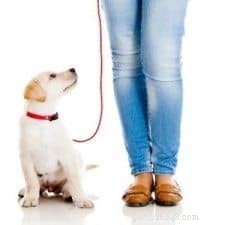
Description: This technique calls for you to tether your puppy to you by leash and have them follow you wherever you go when inside your home.
This way they’re never more than a few feet away and have no chance to sneak off unnoticed to potty where they shouldn’t.
You will notice and be able to intervene and correct every possible mistake, taking them outside every time they need to relieve themselves.
Effectiveness: On a scale of 1 to 5, I’d say it’s a 5.
Used correctly, the opportunity for your puppy to make mistakes is completely removed so every single time they need to visit their bathroom spot is a training opportunity you will take advantage of and no mistake goes uncorrected.
Best suited to: People who spend all their time at home with their puppy and would also enjoy literally being tied to their pup all day.
It’s also a good method to throw into the mix for people who’ve found difficulty with ‘constant supervision’ and allow their puppy to sneak off and have accidents in the home, helping them to get better results.
Ease of use: On a scale of 1 to 5, I’d say a 4.
It’s easier than constant supervision as your puppy is attached so you can relax a little in comparison.
It’s easier than using a crate because you don’t have to crate train your puppy. But it’s not as easy as paper training which is very hands off for an owner.
Equipment needed: A quick release collar and a house line / leash.
Further Info: for a detailed discussion of this technique, the benefits, downside, and many more tips, please see my article:Umbilical Cord House Training:What is It? How Does It Work?
I use and recommend a mixture of crate training, constant supervision and paper training.
I primarily use crate training as I firmly believe it’s the most effective method and I’m also a strong believer in the idea that every dog deserves to be crate trained to enjoy the continuous benefits it offers throughout their life.
I use constant supervision extensively because when a puppy is outside of the crate you have to watch them diligently to avoid puppy mistakes.
I use paper training while my puppies have almost zero bladder control until the age of 10 or 11 weeks, and later in life when I can’t avoid leaving them home alone for longer than they can be expected to hold their bladder.
Admittedly this is somewhat going against my advice because I always recommend to avoid paper training if possible.
It encourages or allows your puppy to toilet inside the home, before then training them not to do so. It’s saying it’s OK, before turning full circle and saying that it’s not.
This is confusing to your puppy and harmful to our house training efforts. (Unless you’re going to have a permanent indoor bathroom spot of course, then this method is perfect.)
But even though I recommend against it, using paper training ever so occasionally as a fall back plan works well for me.
I explain more fully why and when I use paper training in later sections of this article on ‘House Training For Full Time Workers ‘, and ‘A Note On Puppies Between 8 And 12 Weeks '
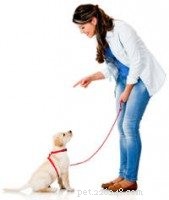 © Depositphotos.com / andresr
 Though not essential, it’s extremely useful to train your dog to eliminate on command.
When you’re in a hurry and need to leave in the morning, or it’s right before bed time, these are times you will wish your dog would eliminate on command rather than you having to patiently wait for them to do their job.
Most dogs love being outside and will use any excuse to get out there and stay there.
So it’s of benefit if you can clearly tell them you’re going outside to toilet only and for nothing else, that there’s no chance of exercise or play. If they don’t potty, they’re coming straight back in.
You do this by using a cue word and walking them on leash to their potty spot, not allowing them to do anything else and if they do not potty, taking them back inside and trying again in a few minutes.
Because a full bladder or bowel is uncomfortable, dogs are happy to relieve themselves, but some may try to hold it if they think they can get to stay outside and sniff around a while.
By not allowing this and associating it with a consistent command, it will only take a few short weeks for them to learn your chosen command means a bathroom break only and that if they don’t go, they’re coming straight back inside uncomfortably full.
If this is something you’d like to train, it’s important that you choose the words to use before you start the training and make sure everybody uses the same words consistently.
If people use different words, your dog will get confused.
So pick a command like ‘toilet time ‘ that you will only use when you’re taking them to the bathroom and you will not allow them to do anything else.
You’ll have a different word like ‘walkies ‘ for other more fun times outside and your dog will eventually learn the difference and set their expectations of their time outside accordingly.
Once outside you can use another command like ‘potty’ or ‘do your job’ to ask them to do their business.
For the first weeks you should wait for them to start doing their business and then use the word ‘potty’ to build an association. And praise them afterwards with ‘good potty’. This will slowly teach them the command.
Eventually your dog will learn ‘toilet time’ means a quick bathroom break only, and ‘potty’ is you asking them to go.
참고: For a very good guide on training to eliminate on command from the ‘Whole Dog Journal’, please click here.
A quick word of caution: Don’t use a word for your elimination command that gets used at other times. For instance, many people use the words ‘hurry up!’, but if you say this to your spouse when heading late out the door, this could get very messy if your dog hears and reacts.
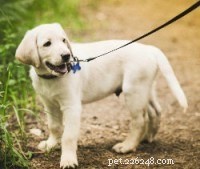
When your puppy’s very young it’s easy enough for you to scoop them up and carry them to their bathroom spot. And this is fine for the first couple of weeks while they have no bladder control and will perform their business very quickly.
But once they start to learn some bladder control, if you take them to potty without them being on leash, as soon as they hit the outside there’s all the sights, sounds and smells that can take over their inquisitive minds.
They easily forget what they’ve gone outside for and will romp and play in your yard instead, before going back inside still full. And some dogs even learn to actively hold their bladder just so they can stay outside to explore for longer.
So it’s in your best interests to lead them on leash to their bathroom spot and keep them there until they complete the job in hand.
Before you can do this you need to first get your puppy used to wearing a collar and leash. To help with this I’ve written a detailed guide that you can read by clicking here:How To Get Your Puppy Used To A Collar And Leash
Start this process at 10 weeks, and always lead them on leash from the 11th or 12th week. You may regret it with lots of time waiting outside if you don’t!
Like everything in life, house training runs smoother if you have everything ready before you start, hopefully before you even bring your puppy home. Although it’s never too late of course!
To help make sure you’re ready, here’s a checklist to cross off and make sure you have everything prepared. Have you:
With all this ready and in place, you’re now ready to begin house training your puppy.
Dogs thrive when living to schedules and routine, doing best when they have set times for eating, going to toilet, exercise, training and play.
And when it comes to house training, you’re going to love schedules and routine too!
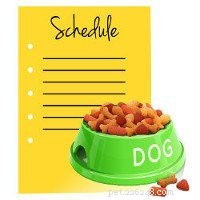
If you feed your puppy at random times throughout the day, they’ll need to defecate at random times throughout the day.
They won’t fall into any predictable schedule and your life will be that much harder.
But because the passage of food through their digestive system stays roughly the same, if you feed your puppy at the same times every day they will need to defecate at roughly the same times every day.
Furthermore, because puppy’s learn through repetition, by taking yours out to potty at the same times every day, their body learns to expect and follow this schedule, training your puppy to toilet at the times you’d like them to.
When you know the times your puppy needs to eliminate you can have them at the right spot at the right time with a far greater success rate than if you didn’t follow a routine.
This results in fewer mistakes, more opportunities to praise your puppy for going in the right place and so speeds up their learning.
Depending on their age a puppy will need to poop 3 to 6 times a day, and wee many more times than that. Can these times be predicted? Mostly they can.
When a puppy needs to potty depends on when they last ate, drank and their recent activities. Mostly they need to go:
But a puppy also needs to go many times per day regardless of recent activities, so you should also take your puppy to their bathroom spot on a consistent schedule such as the following:
This is only a guideline because all puppy’s are different. And on that note…
Not all puppies are the same. Some will need to wee within 2 minutes of drinking, others after 20 minutes. Some will need a bathroom break within 2 minutes of waking, others 15 minutes later.
This means there isn’t a ‘one-size-fits-all’ schedule I can give that’s suitable for every puppy and owner. You have to determine your puppies own natural tendencies and create a schedule to suit.
This may sound like a lot of work but it really isn’t once you get in to the routine. And besides:
Once you’ve determined your puppy’s natural rhythms, you can be at the bathroom spot at the correct times more accurately which is of huge benefit to both you and your puppy, so it’s highly worth doing!
But if you fear living to strict schedules is too hard to do…don’t fear! You don’t have to stick to them 100% of the time.
The more you can stick to schedules and routines, the smoother and faster the process will be. But you can stray from the path when necessary and still find success, it will just take a little longer.
Just don’t be overly strict and hard on yourself because we all have a life to live outside of house training!
So let’s go through the 5 steps of creating your puppy’s schedule.
 © Depositphotos.com / zzve
 Follow this 5-step process to create a schedule that works with your puppy’s natural rhythms and fits with your lifestyle and commitments.
Keeping and following a written schedule may seem odd or a bit excessive, I’m sure you’ve not seen many people bother with it?
But I promise you it’s not much work, after a couple of days practice it becomes a simple routine, the time it takes is negligible and the results are phenomenal.
Depending on how old they are, your puppy needs feeding between 2 and 4 times a day. Here’s a guide to how often and when you should feed them:
You should feed your puppy 4 times a day until 12 weeks old.
To achieve this you need to feed them every 4 hours and you should make it the same time every day, fitting it into a schedule that’s best for you.
A good routine would be to feed ‘breakfast’ when you first get up, at 7:30AM, then at 11:30AM, 3:30PM and 7:30PM.
You should feed your puppy 3 times a day when 12 to 26 weeks old.
The timings for 3 feeds a day would be roughly every 6 hours:7:30AM, 1:30PM and 7:30PM.
From 26 weeks old and onwards, feed your puppy just two times a day
For 2 meals a day you need to space them out 8 to 12 hours apart.
What works for me is shortly after I get up at 7:30 and when we have our evening meal between 6:15PM and 6:45PM.
Availability Of Water:
You should make sure fresh water is always available but because drinking too much or too little can be a sign of health problems, you do need to monitor their water intake.
© Depositphotos.com / Madrabothair Physical activity has a direct influence on a puppy’s potty schedule because it ‘helps things move along’ for want of a better expression.
Physical activity often leads to a puppy needing to potty very soon after. So to encourage predictable potty times for your puppy, you want to schedule their exercise and play.
This will help your puppy’s mind and body to slip into a routine that will help you both with the house training process.
Deciding when to exercise, train and play with your puppy is entirely up to you. You should fit it around your lifestyle and commitments, but try to make it the same times each day if you can.
If you’ve followed the guide so far, you’ve now gathered all the information you need to design your puppy’s house training schedule.
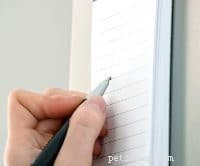
Enter all the following details into a single column in an excel spreadsheet, or write them down as a day schedule with a pen and paper:
After writing down this schedule, tick off each task as you go through the day with your puppy.
This way you will always know what needs to be done and when, and there will be no confusion about whether someone else in the house fed, exercised or took the puppy to the loo.
If it’s not crossed off the schedule, it hasn’t been done.
 © Depositphotos.com / Gajus-Images
 Alongside the schedule you’ve designed, add some columns where you can take notes of your puppy’s bladder and bowel movements, as well as their daily activities.
You do this because it’s important information you can use to design an ever more accurate schedule going forward. (I discuss this further in step 5 below.)
The things you should write in your diary are:
Basically, note down anything food, activity, accident or potty related so you can look for patterns to help you in the next step.
Look over any ‘accidents’ your puppy had and you noted during the day.
You should be able to pick up on any patterns and adjust your own behavior to avoid mistakes in future.
Was puppy left alone and peed in the living room while you made breakfast? – You need to increase supervision or make doubly sure you crate them when you’re busy.
Puppy should never be left alone unsupervised, learn from this mistake.
Or maybe puppy peed in the crate after an hour? – You left them crated longer than they can hold their bladder, or didn’t empty them before crating.
Learn from this mistake.
Look over how long they took to potty after being taken for a scheduled potty break
Did you catch them ‘in the act’ 3 times in a single day? Well done for watching them closely enough.
However, if they tried to go 3 times in the home, you’ve learnt that you likely aren’t taking them to empty themselves often enough. So increase the frequency.
Or perhaps the opposite happened and you noted that 3 times in the day you took puppy for a scheduled bathroom break, they didn’t go and you returned them inside for 15 minutes before trying again?
This shows your puppy is maturing fast, doesn’t have to potty as often as you thought and can last longer between potty visits than you’re allowing.
Therefore you should stretch out the time between visits by 10 to 15 minutes for the following day.
Look over how long after eating they pooped
If you see puppy didn’t potty for 20, 15, 20 and 20 minutes after their meals of the day, with this information you learn it’s pointless to take them to their potty spot until 15 minutes after they finish eating.
Some puppy’s go 2 minutes after eating, some after half an hour. This is how you find out.
By writing out the schedule as in step 3, you should never forget to feed, train or take your puppy to potty. If it’s not marked off on the schedule, it’s not been done.
And by using the schedule as a diary as in step 5, you get feedback on how you and your puppy are performing, and are armed with the necessary info to make changes to your schedule over time.
This helps you to truly match your puppy’s natural rhythms and their maturing and changing body.
You, your puppy and their needs all stay in sync and house training becomes that much easier.
 © Depositphotos.com / ccaetano
 For ease of use, I recommend simply keeping a written diary with good old-fashioned pen and paper.
We’re all in the electronic age surrounded by smart phones and i-Pads, but this is simply too much hassle and will likely lead to you not bothering if you have to power up a device and so on to make an entry.
Just make a spreadsheet in excel and print it out, or simply buy some lined paper.
Keep it somewhere you can always see and know where it is, alongside a pen or pencil and write entries in it as you watch your puppy throughout the day.
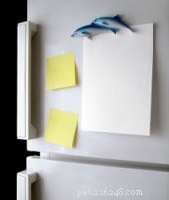
Next to your house phone, pinned to the fridge or by the exit to your puppy’s bathroom spot is a good place to keep it, but put it wherever is best for you.
When you first get your puppy home at 8 weeks, they can barely control their bodily functions so keeping a diary isn’t perhaps that helpful but I still recommend you do so, to get yourself into the habit.
I would recommend keeping a diary every single day until you’ve determined a definite pattern and have spotted their individual ways. Up until they’re 14 weeks old is a good target.
After this, continuing with a diary every day is the best advice, although keeping one for 3 consecutive days each week will be sufficient for you to pick up on any changes as they mature.
Once your puppy is 5 to 6 months old, they will have sufficient bladder control and experience to make a schedule and diary unnecessary.
Just make sure they get access to the outside at least once every 3 hours and all will be fine.
I discussed earlier how a puppy will need regular visits to their bathroom spot, something like every 30 minutes at 8 weeks old, every 45 minutes at 10 weeks old and so on.
But every puppy is different and their progress in having longer time between needed toilet breaks will vary too.
Although your puppy’s natural progression reflects in your diary and your schedule will adjust to suit, you should purposely try to increase the time between breaks yourself if it doesn’t happen naturally.
If you don’t see a natural increase of time between eliminations, add 5 minutes to the scheduled times every 3 or 4 days to stretch out how long they can last.
If they can’t make the time, peg it back 5 minutes and try to increase the time again in a further 3 or 4 days.
You do this because as a puppy grows, the size of their bowel and bladder increases, so they will be able to hold more for longer and you want to take advantage of this.
This is also teaching them necessary bladder and bowel control.
Your aim is to have them needing a toilet break only every 4 hours or so by the time they’re 5 to 6 months old.
In an ideal world, when you take your puppy to potty they will empty themselves completely and instantly, with no delay and not holding any back to release as soon as they’re back in your home.
There are a few things you can do and some that you certainly shouldn’t that will help you to achieve this goal.
Use your cue word before you take them: By using your chosen cue word every time before you take them to potty, your puppy will learn what the trip is about and what they must do. This eventually leads to faster results as they know what is expected of them.
Lead your puppy to the bathroom spot on leash: This gives you the ability to keep your puppy at the bathroom spot and prevent them wandering off, getting distracted and forgetting what they are there for.
This isn’t always possible if you catch them in the act and must hurry, but for scheduled bathroom visits you should always aim to take them on leash.
Make sure you stay with them at their bathroom spot: If you have them on leash, then of course you will be. But if you don’t have them on leash, make sure you stay with them because the separation will just make your puppy anxious to get back with you and they will not potty.
Once at the bathroom spot, don’t say or do anything until they start to eliminate: Puppy’s get distracted very easily and any attention can take their mind off the job in hand. Be boring, uninteresting, and just hold your puppy’s leash until they start to go.
When they start to go, say your chosen cue word in a soft warm voice. Otherwise remain silently still until they’re finished: You need to associate your cue word with the act, but if you say it too loud and brightly, it may distract them and they won’t finish.
Similarly, any other movement or sounds like praising them too early or shuffling your feet might distract them and they might not finish what they’ve started.
If they don’t finish and completely empty themselves, they may finish inside your home and even if they don’t they will not be able to make it to the next scheduled bathroom break so an accident in the home is more likely.
When you’re sure they’ve finished, praise them like mad and reward them: You should heartily praise your puppy for going in the right place, then allow them a few minutes off leash, a couple of minutes play or a tiny (and I mean tiny!) but tasty food treat.
The praise and reward make going to potty a happy experience, tells them they’ve done right and helps them to learn more quickly.
Mix up the reward between play, time off leash and a food reward to keep them guessing, but keep the food rewards to a minimum as what goes in must come out and random feeding promotes random elimination times!
 © Depositphotos.com / c-foto
 First of all, make sure you’ve spent enough time out there.
Many people pop out, stand for 1 minute and then come back in. This isn’t enough as a puppy can only go when they need to go and they may not be ready.
Some people recommend to stay out there for 10, 15, 20 minutes, whatever it takes until they go, then praise profusely when they do. Although this advice may be sound, personally I’d rather not.
I recommend you give them 3 to 5 minutes, saying your cue word every 30 seconds or so but otherwise standing silently still just holding their leash so they cannot wander off.
If after 3 to 5 minutes they haven’t been to toilet, bring them back inside your home and then:
If using constant supervision: Set them down in your home and continue watching them to intervene in case they make moves to go in the wrong place. Take them back to their bathroom spot in 10 minutes or so.
If using a crate for house training: Pop them back in the crate and leave them for 10 minutes. Then take them back to their bathroom spot.
If using umbilical cord training: Take them back into your home and watch your puppy carefully while they’re tethered to you by leash. Take them to their bathroom spot after 10 minutes.
If paper training: If they are confined to the area that’s papered, do nothing. If not, take them away from their bathroom spot and watch them for 10 minutes before returning them to their bathroom spot.
In all cases, just remember you’ve brought them back in with a full bladder so you mustn’t take your eye off them if free in your home.
And if crate training, do not leave them in the crate too long else they may be forced to soil in there. Prevent this at all costs.
Rinse and repeat the visits to and fro like this until they do potty, then follow the next sections advice.
Between scheduled bathroom visits you should do two things:Allow some supervised free time in your home, and use your chosen house training method.
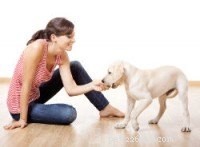 © Depositphotos.com / ikostudio
 After returning from the bathroom spot you should grant your puppy some free time in the room where you spend most of your time, up until 20 to 25 minutes before their next scheduled bathroom visit.
By free time I mean time outside of their crate, or off leash, or out of their confinement area. Time free to roam, explore and live life.
When 10 weeks old they may need to toilet every 30 minutes, so they only get 5 to 10 minutes free time. When 12 weeks old, they may need to toilet every hour so they can get 35 to 40 minutes free time.
You allow this free time because you are of course working toward a time when they will always be free and trusted unsupervised.
To get there they need the experience, to get used to being free in your home and begin seeing it as a place they need to keep clean.
They also need social interaction and life experiences.
The best time to grant this free time is right after a bathroom visit so you’re fairly sure they’re empty and are far less likely to make a toilet mistake in your home.
The important thing to remember is:
When your puppy is free in your home in this way, you must know exactly where they are at all times and be watching them like a hawk, ready to intervene if they look like they’re about to potty where they shouldn’t.
But what are the signs a puppy is about to potty?
When supervising your puppy’s free time, the signs you need to look out for that they need to eliminate are:
The minute you see any of these signs you should take your puppy to their bathroom spot immediately. There may well be some false alarms, but better safe than sorry.
Most puppies will display one or more of these pre-elimination behaviors, but no two puppies are the same so you need to be observant and learn your own puppy’s pre-toilet rituals.
Carefully watch them and you should soon notice what body language means a wee or a poop is imminent. There will be recognizable signs.
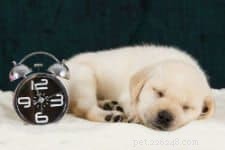 © Depositphotos.com / AOosthuizen
 Once your puppy has enjoyed some free time and it’s nearing 20 to 25 minutes before a scheduled potty visit, you need to switch to using your chosen house training method.
We do this because the time is fast approaching when mistakes are most likely to be made. So we might crate our puppy, or attach a leash for umbilical cord training if we’re using these techniques.
Remember, all free time is closely supervised anyway so you’re ready to react if they’re about to ‘make a mistake’, So..
If using constant supervision: Carry on as you are. Watch your puppy and be ready to react if they look like they’re about to potty. Then at their scheduled potty time, attach a leash and lead them to their bathroom spot.
If using a crate for house training: Encourage your puppy into their crate and close the door, leaving them there until their scheduled potty time and then release them, instantly attaching a leash and leading them to their bathroom spot.
If using umbilical cord training: Attach a leash and tether your puppy to you, ready to react if they make moves to eliminate. Take them to their bathroom spot at the scheduled time.
If paper training: Take your puppy to their confinement area where their papered bathroom spot is and supervise them, ready to intervene if they make moves to potty away from the paper. Encourage them to potty at their scheduled time if they don’t do so naturally.
If you catch your puppy pottying in the wrong spot, you should simply clap your hands and say a firm ‘NO!’. You don’t want to shock and scare them, just loud enough to startle and get their attention.
It’s very important you DO NOT scare them as they may become afraid to potty in front of you. Not good when you need to be there to encourage them for doing it in the right place.
When you clap and say ‘NO!’, some puppies will stop what they’re doing, but others may not.
If they do, you can pick them up and carry them, or take them by the collar and gently lead them to their bathroom spot, then encourage them to finish where they should.
But if your puppy doesn’t stop mid-flow, my advice is to accept the fact you’re too late, you didn’t recognize the signs they needed to potty (or weren’t watching them closely enough) and you should let them finish and then clean it up.
Many people recommend to pick your puppy up and take them outside even if they don’t stop. But to me this seems foolish.
Instead of a little pile or puddle, you then have a long line of wee or poop from where you caught them all the way to the bathroom spot that you then have to deep clean instead. To me this isn’t worth the extra cleaning effort.
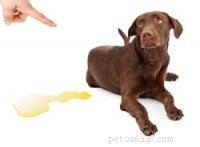 © Depositphotos.com / adogslifephoto
 There is nothing you can do.
You’ve missed the opportunity to correct your puppy and anything you do now your puppy will be unable to connect to the act of pottying in the wrong place.
If you get angry, shout at or punish them in any way, they might ‘look guilty’ trying to appease you, but they will have no idea what it is that’s driven you mad. They’re just trying to calm the situation.
And what sometimes happens is a puppy learns that poo on the floor is what you’re mad about, causing them to slink away to poo where it’s hidden, or worse they may even eat it so you don’t see it and get mad.
So if you stumble on a mess you didn’t catch them make, simply move them away and deep clean the area.
Then think how they were able to make such a mistake and tweak your plans so it cannot happen again. But any corrections or punishment now will be futile.
This advice applies not just to full-time workers, but also if you must occasionally leave your puppy home alone for a few hours.
Most importantly, follow all the advice in this guide so far for the times that you are home.
Supervise them, correct any mistakes, set feeding and elimination schedules and everything else I have advised. Then, what follows are your choices of what you can do to cover when you aren’t at home.
First of all, if like me you use a crate, you simply cannot leave your puppy in the crate for many hours. They’ll be forced to potty in there after a very uncomfortable time trying to hold it for as long as they possibly can.
This is very unfair on your puppy and it will destroy the crates power as a house training tool if they lose the instinct to keep it clean.
Secondly, please do your best to enlist the help of a family member, friend, neighbor or hire a dog walker to periodically pop in to visit your puppy, take them to their bathroom spot, give them some social interaction and so on.
I understand this isn’t possible for all owners, but you should strive to achieve this if possible.
Having said that, what should you do about house training when you aren’t at home:
Throughout the many articles of this guide you will have read me advising against paper training unless you’re planning on a permanent indoor bathroom spot for your dog.
But I also freely admit to using paper training myself occasionally, for the unavoidable times I have to leave my puppy home alone for a few hours.
If you have to leave your puppy home alone for any reason, usually because you work, then paper training in your absence is the only thing you can do.
You then have two options available to you:Buy and use an exercise pen, or confine your puppy to a single, puppy-proofed room.
[amazon fields=”B003XU0B62″ value=”thumb” image_size=”large” tracking_id=”labradortraininghq-20″ image_class=”ais200fr”] An exercise pen is a confinement device that looks like a crate but is much larger and has no roof. They can have any number of panels, be square, hexagonal, octagonal, L-shaped…they’re very flexible (an example 8 sided pen is in the image to the right.)
You use it to confine your puppy so you know they’re safe, as is your home and belongings from their teeth.
They’re big enough for you to paper an area inside to use as a toilet, while leaving space where you can set up your dogs bed, a water bowl and some chew toys and so on away from where they have to potty.
Initially use less than half of the confinement area for your puppy’s bedding, toys and water bowl, then paper over the remaining floor space.
As they get used to pottying on paper, reduce the area covered one sheet at a time until just a small area remains covered.
Once you know your puppy can hold their bladder for longer than they have to be left alone, remove the paper altogether.
By 16 to 20 weeks, they should be able to last the 3 or 4 hours max they will be left alone and somebody comes to exercise them and allow a bathroom break.
참고: You should get your puppy used to an exercise pen by using the same techniques as crate training, so please refer to my guide to crate training puppies
[amazon fields=”B004RL1KPC” value=”thumb” image_size=”large” tracking_id=”labradortraininghq-20″ image_class=”ais200fl”] When I’ve had to leave a puppy alone, I confine them to a paper covered area of a puppy proofed room, with a puppy pad in a holder.
Between 8 and 12 weeks (when weeing seems spontaneous), my puppy spends a fair bit of time in there and I paper train them to use puppy pads.
Most recently, the room I used was basically our dining room, though it’s never used for that purpose and is essentially bare.
Our kitchen and dining room was separated by an arch where a door used to be, with tiled flooring, making it ideal.
I used a baby gate across the arch between the kitchen and dining room, and initially covered the dining area with paper, over time reducing it to just two sheets with the puppy pad holder on top.
The dining area is completely empty, with no furniture, nothing in there. So it’s as puppy proofed as can be. But a word of warning…
If you use this option and have any furniture or anything at all in the room, it’s likely it will be scratched and chewed! Skirting boards, the corners of furniture items, anything within reach is a potential target for teeth and claws.
My girlfriend works from home, we crate trained and we had no problem finding house sitters in an evening if we needed one, so we all but had things covered. But this is something you need to be mindful of.
So I recommend using an exercise pen if you’re going to leave your puppy alone often and there’s any chance of a room being damaged.
 © Depositphotos.com / feedough
 Regardless of the method of house training you choose, some form of confinement is almost always necessary, for the times when you really cannot watch your puppy.
And there will always be a time or two so it’s best to prepare in advance.
You may have an unexpected visitor or need to visit A&E in an emergency. Whatever the reason, there just WILL be times you cannot supervise your puppy.
If you’re using a crate, you have these times covered.
But if you’re against a crate for whatever reason and have chosen to exclusively use constant supervision or umbilical cord training, you will have to invest in an exercise pen or confine your puppy to a single room and use paper training.
The essence of house training is to prevent mistakes and praise your puppy heavily when they potty in the right place.
If you cannot watch your puppy, the chances of them making a mistake go through the roof.
So even if you choose to use a constant supervision method exclusively, you will still need to confine your puppy sometimes to a paper covered area just in case.
 © Depositphotos.com / domako
 You’ll likely find your 8 week old puppy has absolutely no bladder control. I mean literally none at all.
One minute they are trotting along, the next they are leaking. No warning signs for you, not even any warning signs for them. They just don’t know it’s going to happen themselves.
It’s not their fault, it’s just their immature bodies doing what they do.
During this time it’s foolish to allow them on your living room carpets for even a second.
I recommend setting up an exercise pen with the entire area papered, or do as I do and confine them to a room with the entire area papered.
Use this time to paper train them, to get them used to weeing on paper and gradually reduce the area because you will use this method if you ever have to leave them home alone during the next 4 or 5 months.
Some time between 8 and 12 weeks, your puppy will start to show some bladder control (usually 9 to 10 weeks) and will begin to show warning signs that they’re about to potty instead of instantaneously leaking. They will sniff, circle and so on as I mentioned before.
At this point you can now move on to using your chosen house training method.
I’m not saying when 8 weeks old you don’t house train them. Do! Start encouraging them to potty in the right place from the minute you get them home.
I’m just saying that it’s very hard when you have absolutely no warning for the first few days to a couple of weeks. Just don’t get mad at your puppy, it isn’t their fault and you should expect this.
A young puppy will not be able to last through the night without needing to potty. However, similar to humans a dog’s body slows down during the night and the need to toilet is severely reduced.
So the good news is, even at 8 weeks they will be able to last 4 or so hours and you will only need to wake once during the night.

Allow your puppy no food for 3 hours and no water for 2 hours before bed. Also, make sure to take them to their bathroom spot right before you go to bed so they can empty themselves.
Then set an alarm for 4 hours after their bed time when you must get up and take them to their bathroom spot. No excuses, you simply must do this.
If you find your puppy has soiled in this time, you should set the alarm for half an hour earlier the next night (3.5 hours). Repeat until you find you’re waking before they’ve had an accident.
After a few days of not having a night-time accident, set your alarm for 15 minutes later and increase the time by 15 minutes for each successful night they do not have an accident.
The time a puppy can last over night without needing to potty increases dramatically during their first few weeks so you’ll find this is OK to do.
If you find they make a mistake one night before you wake, set the alarm back half an hour, make sure they stay dry a few days and then increase 15 minutes nightly again.
Within a few short weeks you’ll find they can last a full 7 hours without needing a bathroom break.
And by using this schedule, you strike a good balance between a couple of inevitable accidents while stretching out the time at a good pace to lasting a full night.
It’s important that your puppy isn’t forced to eliminate in their crate as it can ruin their natural instinct to keep it clean, the very thing we take advantage of to help the house training process.
This is why I recommend if you find a mess you set the alarm for half an hour earlier, a reasonably big step back to where they’ve been successful at before.
If they soil their crate more than once in any given week, you may have to progress slower (add 15 minutes every 2 or 3 days), or perhaps sleep them in a papered exercise pen or their confinement room.
Maintaining their instinct to keep the crate clean is of utmost importance.
You should also consider consulting your vet to make sure it’s not a medical problem causing the mistakes.
When you take them out at night, say your chosen cue word, take them straight to their bathroom spot, praise them gently when they finish their business but do not reward them with anything else.
The last thing you want is to teach your puppy that during the night is a time for play or food treats!
This will come back to haunt you in a big way and result in noisy sleepless nights. You want your puppy to learn that night-time is for sleeping and for nothing else.
When the alarm goes off, collect them, take them to potty, praise with a simple, deadpan ‘Good potty! ‘ then silently take them back and return to sleep until the morning. Do nothing else.
No two puppies are the same. Some will be able to last the whole night without a potty break at 10 weeks (rarely), and some may not be able to at 15 weeks (also rarely).
But certainly by 16 weeks old your puppy will be able to last a 7 hour night without needing to potty if you do not feed them for 3 hours or provide water for 2 hours before bed time and allow them to empty themselves right before you lay down for the night.
 © Depositphotos.com / Nivens
 If you seem to be making little progress and your puppy is weeing and pooping randomly all the time, or just doesn’t seem to be developing bladder control, it could be due to medical reasons.
If you are feeding, exercising, training and playing with your puppy to a schedule, and when you look at your diary there seems to be no pattern to the times they need to potty, you should seek the advice of your vet.
Common ailments such as gastroenteritis, urinary tract infection and health issues affecting internal organs and the genitalia can lead to a dog needing to potty much more frequently, often leading to eliminating in the house.
Also, you should regularly check the firmness and consistency of their stools and if they’re too hard and dry, or soft and runny, there’s likely something wrong with their diet or a medical condition to blame. Again, seek the advice of your family vet.
You cannot successfully house train a puppy who is ill because their bodily functions will be too unpredictable. But of course if they’re ill, you want to have them back to good health anyway!
The simple answer is:‘When your puppy’s proven that they know to never soil inside your home.’
The average will be between 6 and 7 months old. The élite few may be some weeks earlier and yet others, particularly the smaller breeds, may take from 8 to 10 months. But 6 to 7 months is the ball park figure to aim for.
However, you have to be careful here and can’t judge it by a clock or calendar, you have to judge it by your puppy’s behavior and only stop when they have proven you can trust them.
A single mistake in the home can cause a major setback.
A puppy may not make a mistake for 2 weeks, then you give them too much freedom, they make a mistake and all of a sudden they are regularly trying to potty in the home again.
Also, some puppies just seem to forget everything for a few days now and then while growing up, even after being perfect for a couple of weeks.
Please remember this, expect it even, because it’s perfectly normal and you shouldn’t get worried or think your dog is being naughty. Just stick to your plan and they WILL eventually get it.
So anyway, it’s in your best interests to show caution and not be too hasty to end the house training process.
My advice would be to continue until they haven’t even attempted to make a mistake for at least 6 weeks so you can be sure they really have ‘got it ‘.
With house training, the fewer mistakes you allow your puppy to make and the more they are rewarded for doing the right thing, the quicker they will learn and the faster you will find success.
Because of this, the more effort you put in and the more time you spend with your puppy at the beginning – supervising to correct mistakes and taking them to their bathroom spot many times each day – the better.
But there are many other things you can do to help yourself and your puppy to find success. Setting up routines and schedules, controlling your puppy’s diet, understanding your puppy’s capabilities at different ages, working with their natural instincts and more besides.
This guide has provided you with all the theory, strategies, tips and tricks you will ever need to successfully house train your puppy as quickly and efficiently as possible, with the fewest mistakes along the way.
Put into practice what you’ve read within this guide and with a little patience and dedication you will be able to turn any puppy into a house training champion.
This was part 11 in a 12-part series where I’ve tried to provide all the guidance you could possibly ever need and covered everything I can think of for you to successfully house train your puppy or adult dog.
아래에 링크된 전체 시리즈를 확인하세요:
This guide has taken me many weeks to put together so I’m hoping it will prove useful to people.
I would love to hear any feedback you have whether good or bad, so I can improve the guide over time and make sure it’s as useful as can be.
If you have any feedback, comments, questions or suggestions on how to house train a puppy, please add them to the comment section below and I will answer every one. Thank you :-)
For an entire website dedicated to House Training:www.TheHouseBreakingBible.com
For many example schedules for puppies of different ages, see:Housetraining from ‘The Academy’, Canada.
For a nice, detailed guide with some further tips and advice, see:How To Potty Train A Puppy, from ‘Fido Savvy’
새로운 안내견 강아지를 위해 제공되는 모든 용품 목록을 보려면 PuppyInTraining.com 블로그의 새 강아지 체크리스트를 확인하세요.
배변 훈련은 강아지 입양의 덜 즐거운 측면 중 하나이지만 강아지에게 가장 먼저 가르쳐주고 싶은 것 중 하나입니다. 일주일 동안의 교육과 강화 후에도 그녀가 여전히 부적절한 장소에 웅덩이와 꾸러미를 남겨둔다고 해서 절망하지 마십시오. 미국 휴메인 소사이어티(Human Society of the United States)는 강아지 부모에게 하우스트레이닝이 평균적으로 몇 주가 소요될 수 있으며 일부 품종은 다른 품종보다 더 오래 걸린다고 조언합니다. 또한, 모든 강아지는 고유한 성격을 가지고 있어 모든 강아지를 집에 부수는 특정 시간 프
아무도 소변 냄새를 좋아하지 않습니다. 냄새가 다른 개에 대해 배울 수있는 좋은 방법이라고 결정한 개를 제외하고는. 그것이 자신의 소변이더라도 앞으로 소변을 봐야 할 위치에 대한 훌륭한 지표 역할을 하는 것 같습니다. 당신의 강아지가 여전히 배변 훈련을 받고 있거나, 너무 오랫동안 안에 있었거나, 노년에 소변을 참는 것이 더 어렵거나, 개 주인은 강아지가 사고를 겪는 것을 종종 발견하는 것이 매우 일반적입니다. 단단한 나무 바닥이 있는 경우, 지저분한 것을 청소하고 얼룩을 제거할 수 있는 것을 찾는 것이 중요합니다. 그래야 개가 같
